Synopsis
Broadcasting from Camp Ramah in the Berkshires. We are the soundtrack for each summer! Our air is filled with shows produced by and for the campers!LISTEN LIVE: http://KolRamah.us
Episodes
-
![Parsha talk Behaalotkha 2025 5785]()
Parsha talk Beha'alotkha 2025 5785
13/06/2025 Duration: 35minParashat B-ha’alot’kha [Numbers 8:1-12:16] has a number of different topics, including the story where Miriam and Aaron apparently malign Moses and Miriam is punished with tza’ra’at [commonly translated as leprosy] and Pesach Sheni, the provision for the observance of Passover a month later for those who were too far from Jerusalem or were ritually impure when the holiday was supposed to be observed in Nisan. Our focus was mostly on the little story between Hovav [Moses’ father-in-law apparently] and Moses [Numbers 10:29-34], which has a parallel in Exodus 18. We continue to have in our hearts and minds the hostages, dead and alive, who continue to be held in Gaza, may they speedily be returned to their families, and the soldiers defending Israel in the Israel Defense Forces, may they be removed from harm’s way. Shabbat Shalom.
-
![Parsha Talk Naso 5785 2025]()
Parsha Talk Naso 5785 2025
06/06/2025 Duration: 37minParashat Naso [Numbers 4:21-7:89] contains, among other things, the longest chapter in the Torah, Numbers 7 which describes in detail the gifts of each of the tribal chieftains to the Tabernacle. Each chieftain gives the exact same gift, which is faithfully recorded, accounting for the length of the chapter. There are other things of note, including the rite of the suspected adulteress [sotah], and the Nazir, the one who takes upon himself additional restrictions for a prescribed period of time. Our entire conversation focused on the six verses [Numbers 6:22-27] which include the priestly blessing. We hope you enjoy it! Over 600 days after October 7, 2023, we continue to keep in mind the hostages remaining in Gaza, both the living and the dead, and pray that they be returned speedily to their families. We also keep in mind those soldiers defending Israel as part of the Israel Defense Forces, may they be removed from harm’s way. Shabbat Shalom.
-
![Parsha Talk Bemidbar 5785 2025]()
Parsha Talk Bemidbar 5785 2025
30/05/2025 Duration: 41minParashat B’midbar [Numbers 1:1-4:20] is the first parashah of the Book of Numbers. As befitting a book called Numbers, the parashah is filled with numbers, in particular, the number of men of fighting age in each tribe. An additional feature of the parashah is the tribal names of each of the tribes, which can provide interesting information for those who enjoy studying such things. Censuses, for many, are mind-numbing. We spent the first half of our conversation talking about the social structure revealed by the organization of the Israelite camp. The second half of our conversation was devoted to Shavuot, which begins Sunday evening, June 1. We hope you find something worthwhile for your deeper understanding of the parashah, and for the holiday which the rabbis identify as the Time of the Giving of the Torah. As the hostage crisis passes 600 days, we continue to be mindful of those still in Gaza, both the living and the dead, and continue to pray fervently that they be speedily returned to their famili
-
![Parsha talk Behar Behukotai 5785 2025]()
Parsha talk Behar Behukotai 5785 2025
23/05/2025 Duration: 38minParashat B’har-B’hukotai [Leviticus 25-27], a double parashah, the third in four weeks for those keeping score, is the concluding reading from ספר ויקרא [the Book of Leviticus]. Leviticus is the shortest book in the Torah, only 27 chapters, and with all the double parashiyot this year, is finished in only seven weeks. In his JPS Torah Commentary, Baruch Levine divides the reading into 3 sections: Principles of Land Tenure [25:1-26:2], Epilogue to the Holiness Code [26:3-46], more commonly known as the Tokhekhah [The Rebuke, with a parallel version in Deuteronomy 28], and Funding the Sanctuary [chapter 27]. Our discussion mostly focused on chapter 25, in particular the laws of sh’mittah [sabbatical year] and yovel [jubilee year]. On one hand it is hard to figure out how they worked in practice; on the other, it is hard to figure out how utopian legislation fits into a legal code. Is law supposed to be practical or aspirational? This week we were shocked by the murders of Sarah Lynn Milgrim and Yaron Lischi
-
![Parsha Talk Emor 2025 5785]()
Parsha Talk Emor 2025 5785
16/05/2025 Duration: 36minParashat Emor [Leviticus 21:1-24:23] is perhaps best known for chapter 23, which describes the holidays and is the Torah reading on the 2nd day of Passover and the first 2 days of Sukkot. It is surrounded by laws related to the priesthood [including restrictions on contact with the dead and whom priests are permitted to marry] and a collection of laws which features one of the few narratives in Leviticus, the curious case of the blasphemer [24:10-22]. It is a spirited discussion; we hope you enjoy it! We are fortunate to take note of the release of Edan Alexander, and continue to pray and hope for the release of all the remaining captives in Gaza, both the dead and the living. We continue to keep in mind the soldiers defending Israel as part of the Israel Defense Forces, may they be removed from harm’s way. Shabbat Shalom.
-
![PARSHA TALK AHAREI MOT KEDOSHIM 2025 5785]()
PARSHA TALK AHAREI MOT KEDOSHIM 2025 5785
16/05/2025 Duration: 35minParashat Acharei Mot-K’doshim [Leviticus 16-20] is another double parashah. Acharei Mot is mostly known because it is read on Yom Kippur, chapter 16 about Yom Kippur in the morning, and chapter 18, traditionally, about the forbidden sexual relationships in the afternoon. K’doshim is perhaps best known for what Rabbi Aqiva recognized as the great principle of the Torah, v-ahavta l-rei’akha kamocha, you should love your neighbor as yourself [Lev. 19:18]. We took note that this verse is paired with a later one [19:34], which commands love of the resident alien in our midst as well. It is hard to pass up the rich text of Leviticus 19, the beginning of the Holiness Code, and so we discussed some of the laws that spoke to us. We also discussed at some length the difference between Leviticus 19 and Exodus 20, which share many of the same laws but cast them in different lights. The Ten Commandments are addressed to the individual who belongs to a nation; chapter 19 is an exercise in community formation. While t
-
![Parsha Talk Tzaria Metzora 5785 2025]()
Parsha Talk Tzaria Metzora 5785 2025
09/05/2025 Duration: 30minTazria-Metzora [Leviticus 12-15] is the first in a series of doubled parashiyot in the Book of Leviticus. With its emphasis on afflictions of the body, some caused by disease and some caused by natural processes, it has been a test for those seeking to find homiletical material connected to the text. It has been well said that doubling up makes the task easier in that there is only one difficult week, rather than two. Nevertheless, the parashiyot do raise some fascinating questions for the modern mind. Can we envision a priestly Judaism in 2025? Should we place as much emphasis on the body as a tool for religious expresssion as our ancestors apparently did? What might we learn from the biblical example where the issue of tumah and taharah [impurity and purity] with respect to tzara’at [often translated, mistakenly, as leprosy] is decided by the priest rather than the disease itself? And finally, the bayit ha-menuga, the house afflicted by leprosy, is one of 3 cases [the other two being the stubborn and
-
![Parsha talk Shmini 5785 2025]()
Parsha talk Shmini 5785 2025
25/04/2025 Duration: 39minParashat Sh’mini [Levitcus 9-11] is the third parashah in Levitcus, and features the culminating ceremony for the inauguration of the mishkan, what Baruch Levine calls “The Initiation of Formal Worship” in his JPS Commentary on Leviticus. It culminates with the tragic deaths of Nadav and Avihu, which we discuss at some length. We also touch upon Yom HaSho’ah, Holocaust Remebrance Day, which is observed Wednesday evening, April 23, and Thursday, April 24. We are ever mindful of the hostages, dead and alive, and hope for the speedy return to their families. We pray that the soldiers defending Israel as part if its Defense Forces are removed from harm’s way. Shabbat Shalom.
-
![Parsha Talk 7th Day of Pesach 5785 2025]()
Parsha Talk 7th Day of Pesach 5785 2025
23/04/2025 Duration: 40minThis shabbat is shabbat/yom tov sh’vi’i of Pesach, the shabbat that coincides with the 7th day of Pesach, which is a holiday. In Israel, where Eliot is for the birth of his 2nd granddaughter, it is the last day of Passover. In the Diaspora, Sunday [April 20th] is the 8th and concluding day of Passover. For the rabbis, the 7th day of Passover was the day when the Israelites crossed the Sea of Reeds [sometimes mistakenly referred to as the Red Sea], which culminated with the song, Az Yashir [Exodus 15:1-21]. Our conversation focused almost entirely on the passage itself through the Sea of Reeds, and some of the elements of the song, which appears in two versions, one led by Moses, and a shorter one led by Miriam. We continue to be mindful of the hostages still in Gaza, both the dead and the living, and the need for them to be returned to their families. In this season of redemption, we pray that redemption speedily comes to those held captive. We also keep in mind the soldiers defending Israel as part of I
-
![Parsha Talk Pre Passover 5785 2025]()
Parsha Talk Pre Passover 5785 2025
10/04/2025 Duration: 35minParashat Tzav [Leviticus 6:1-8:36] picks up where Parashat Va-yiqra leaves off, with a presentation of the principal individual sacrifices, only this time from the priest’s point ot view. Chapter 8 begins the inauguration cermeony of the priests, with its tragic denouement next week, with the deaths of Nadav and Avihu. We decided to leave Tzav for a future year’s discussion and discuss Passover [beginning Saturday night, April 12, 2025], and in particular the Haggadah. What is the story we tell? As has been the case since 10/07/24, we are ever mindful of the hostages, dead and alive, who remain in Gaza and who need to be returned to their families. We also keep in mind the soldiers defending Israel as part of Israel’s Defense Forces, may they be removed from harms way. In this month of historic redemption may we witness the redemption of the captives. This, too, is a story that must be told this year, and perhaps every year thereafter. Shabbat Shalom v-chag same'ach.
-
![Parsha Talk Vyikra 5785 2025]()
Parsha Talk Vyikra 5785 2025
03/04/2025 Duration: 34minParashat Va-yiqra [Lev. 1:1-5:26] in a sense takes up where Exodus 40:38 left off. The last passage in Exodus informs us [Exod. 40:35] that “Moses could not enter the Tent of Meeting, because the cloud had settled upon it and the Presence of the Lord filled the Tabernacle.” Leviticus begins, “The Lord called to Moses and spoke to him from the Tent of Meeting, . . . “ We discussed the features of Leviticus which spoke to us [it is my favorite book in the Torah] and what the sacrificial system outlined in the parashah could say to us in 5785/2025. We also considered the nature of the divine-human dialogue: how does it manifest itself? what is it for? and the like. As has been the case since 10/07/23, we are ever mindful of the hostages, dead and alive, who remain in Gaza and who need to be returned to their families. We also keep in mind the soldiers defending Israel as part of Israel’s Defense Forces, may they be removed from harm's way. In this month of historic redemption may we witness the redemption
-
![Parsha Talk Pekudei Ha-chodesh 5785 2025]()
Parsha Talk Pekudei Ha-chodesh 5785 2025
28/03/2025 Duration: 39minParashat P’qudai [Exodus 38:21-40:38] concludes the book of Exodus. It also coincides with Shabbat Ha-Hodesh, the fourth special shabbat preceding Passover [beginning this year, Saturday night, April 12]. We spent some time discussing the end of the Book of Exodus, with the erection of the mishkan, and what that might mean for our understanding of the book as a whole. We also discussed the maftir reading for Ha-Hodesh [Exodus 12:1-20], considering the significance of the calendar. We remain ever mindful of the hostages, dead and alive, who remain in Gaza. May they be restored immediately to their families. We also keep in mind the soldiers defending Israel as part of Israel’s Defense Forces, may they be removed from harm’s way. Shabbat Shalom.
-
![Parsha talk Vayakhel 5785 2025]()
Parsha talk Vayakhel 5785 2025
21/03/2025 Duration: 40minThis week’s parashah is Va-yaqhel [Exodus 35:1-38:20]. It is also Shabbat Parah, the third special Shabbat before Passover. Shabbat Parah always falls the Shabbat before Shabbat Rosh Hodesh Nisan or, as this year, two shabbatot before Rosh Hodesh Nisan. The weekly parashah is often combined with next week’s parashah [Pequdai] to conclude the reading of Exodus with a flourish, the entire construction of the mishkan [Tabernacle]. This year they are read separately. It may seem familiar because the description of the construction closely follows the description of the plans for the mishkan which were featured three and two weeks ago, in parashat T’rumah and parashat T’tzavveh. Our discussion focused on the first verse of the first aliyah [the first verse of the parashah, Exodus 35:1] and the first verse of the second aliyah [Exodus 35:21]. We compared the construction of the mishkan with the making of the Golden Calf and discussed what motivates gift giving. How are we to understand why the Israelites gave
-
![Parsha talk Tetzaveh Zakhor 5785 2025]()
Parsha talk Tetzaveh Zakhor 5785 2025
14/03/2025 Duration: 38minParashat T’tzavveh [Exodus 27:20-30:10] coincides with Shabbat Zakhor, the second of the four special shabbatot before Passover, each with its own maftir [Deuteronomy 25:17-19] and haftarah [1 Samuel 15:2-34]. The weekly Torah reading picks up where last week’s left off, continuing the discussion of the provisioning of the Tabernacle. In particular, we discussed the clothes of the high priest and what they might mean. In addition, we discussed the maftir, with its call to annihilate Amalek, together with the parallel text in Exodus 17:8-17, which describes the original battle [and is read on Purim morning]. How should we refer to our enemies, if at all. These are some of the topics which engaged. We are ever mindful of the hostages, both dead and alive, and the need for their return to their families now, and of the soldiers who defend Israel as part of the Israel Defense Forces, may they be removed from harm’s way. Shabbat Shalom.
-
![Parsha talk Ki Tissa Purim 2025 5785]()
Parsha talk Ki Tissa Purim 2025 5785
14/03/2025 Duration: 39minParashat Ki Tissa [Exodus 30:11-34:35] is perhaps best known for the episode of the Golden Calf and the repairs entailed by that grievous sin. Our conversation focused on the לוחות, generally understood as the stone tablets on which were incised the Ten Commandments. We discussed the significance of the material, stone, as compared with papyrus in Egypt and parchment in Israel; the stone seems to reflect the Babylonian preference for clay tablets. What did these tablets look like? Did they, or how did they, function in ancient Israelite society? We also took some time to discuss an aspect of Megillat Esther, since Purim is Thursday night and Friday [March 13-14]. In particular, the last verse of chapter 8, where it is recorded “And many of the people of the land professed to be Jews, for the fear of the Jews had fallen upon them.” What does it mean to be מתיהדים, [mityahadim, in which one can see the root yehudi (Jew)], “to profess to be Jews”? We remain ever mindful of the remaining hostages, dead and
-
![Parsha Talk Mishpatim 2025 5785]()
Parsha Talk Mishpatim 2025 5785
05/03/2025 Duration: 35minParashat Mishpatim is called The Covenant Code by biblical scholars. It has, as Jeremy notes, over 50 commandments. The laws are both many and varied, regulating all spheres of human life. During this difficult week, we spent a lot of time in our conversation seeking out comfort. On the face of it, Mishpatim might seem an unlikely source of comfort, but we offer avenues wherein comfort might come. At the end, we discuss the two words נעשה ונשמע [na’aseh v-nishma, Exod. 24:6], often translated as “we will do, we will understand”, which seems to reverse the normal or usual way we act, with understanding preceding action. We remain ever mindful of the hostages still in captivity, may they be returned speedily to their families, and to the soldiers defending Israel as part of the Israel Defense Forces, may they be removed from harm’s way.
-
![Parasha Talk Trumah 5785_2025]()
Parasha Talk T'rumah 5785_2025
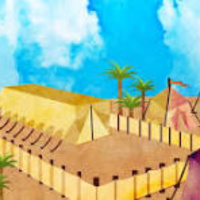
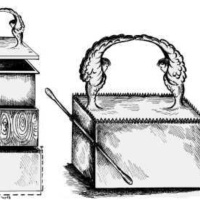
04/03/2025 Duration: 31minAs Eliot notes, Parashat T’rumah [Exodus 25:1-27:19] begins the 2nd half of the Book of Exodus and is concerned mostly with the planning for and construction of the mishkan, the portable tabernacle which accompanies the people in their wandering in the wilderness. The purpose of the mishkan and how it fits into the larger religious life of the people is the basis of part of our conversation. We also take up the plans for the ark and its symbolism. We consider the roles of Moses, who conveys the plans for the mishkan to the people, and B’tzalel and Oholiab who actually construct it. This Shabbat is Rosh Hodesh Adar [the second day of Rosh Hodesh but the 1st day of the Hebrew month of Adar]. It is also Shabbat Sh’qalim, the 1st of the 4 special shabbatot preceding Passover. It is the official beginning of the Passover season, with all that implies. In this difficult week for Israel and the worldwide Jewish community we are ever mindful of the hostages, both dead and alive, and the need for their return to
-
![Parsha Talk Yitro 5785 2025]()
Parsha Talk Yitro 5785 2025
14/02/2025 Duration: 32minParashat Yitro [Exodus 18:1–20:23] features the 10 Commandments. Before we get to the Ten Commandments we spend some time discussing the character of Jethro, who makes his appearance in chapter 18. We actually recorded this when we recorded the episode on B’shallach, for last week, in order to accommodate Eliot’s travel to Israel for his daughter Naama’s wedding this week. Mazal Tov! We remain ever mindful of the hostages still in captivity, may they be returned speedily to their families, and to the soldiers defending Israel as part of the Israel Defense Forces, may they be removed from harm’s way. Shabbat Shalom.
-
![Parsha Talk Bo 5785 2025]()
Parsha Talk Bo 5785 2025
06/02/2025 Duration: 36minParashat Bo [Exodus 10:1-13:16] is jam-packed with interesting passages. The eighth and ninth plagues take place as well as the announcement of the tenth and final plague [ch. 10-11]. This is followed by the long chapter 12 [51 verses] which we will meet again on Shabbat Ha-Hodesh, the shabbat before or coinciding with Rosh Hodesh Nisan [this year on March 29, 2025] when we will read the first twenty verses, and the first day of Pesah [April 13, 2025], when we will read the remainder of chapter 12. Nahum Sarna labels chapter 12 “The Last Act”, and the verses in chapter 13 [1-16] “Commemorative Rituals”, which includes two of the four passages found in tefillin [Exodus 13:1-10 and 11-16]. The time frame and the action described in chapter 12 is somewhat confusing so we devoted most of our conversation to unpacking what we think happened. We spend sometime also discussing the vigil [leil shimurim]] mentioned in 12:42. While we are grateful for the release of the hostages last week, we remain mindful of all
-
![Parsha talk Beshalah 5785 2025]()
Parsha talk Beshalah 5785 2025
06/02/2025 Duration: 31minParashat B’shallach [Exodus 13:16-17:16] includes the Song of the Sea [15:1-19], which has been incorporated in the daily morning liturgy. It concludes with the original battle with Amalek [Exodus 17:9-16], which will be read again on Purim [March 14, 2025]. Our conversation divided into two, the first part dedicated to a discussion about Joseph’s bones and the second to a conversation about the liturgical dimension of the Song of the Sea and what that might mean for the partipants in the singing. We remain ever mindful of the hostages still in captivity, may they be returned speedily to their families, and to the soldiers defending Israel as part of the Israel Defense Forces, may they be removed from harm’s way. Shabbat Shalom